The Mark Podwal Prize in Visual Art

In 2025, The Elie Wiesel Foundation created and sponsored The Mark Podwal Prize in Visual Art, Visions of Judaic Identity.

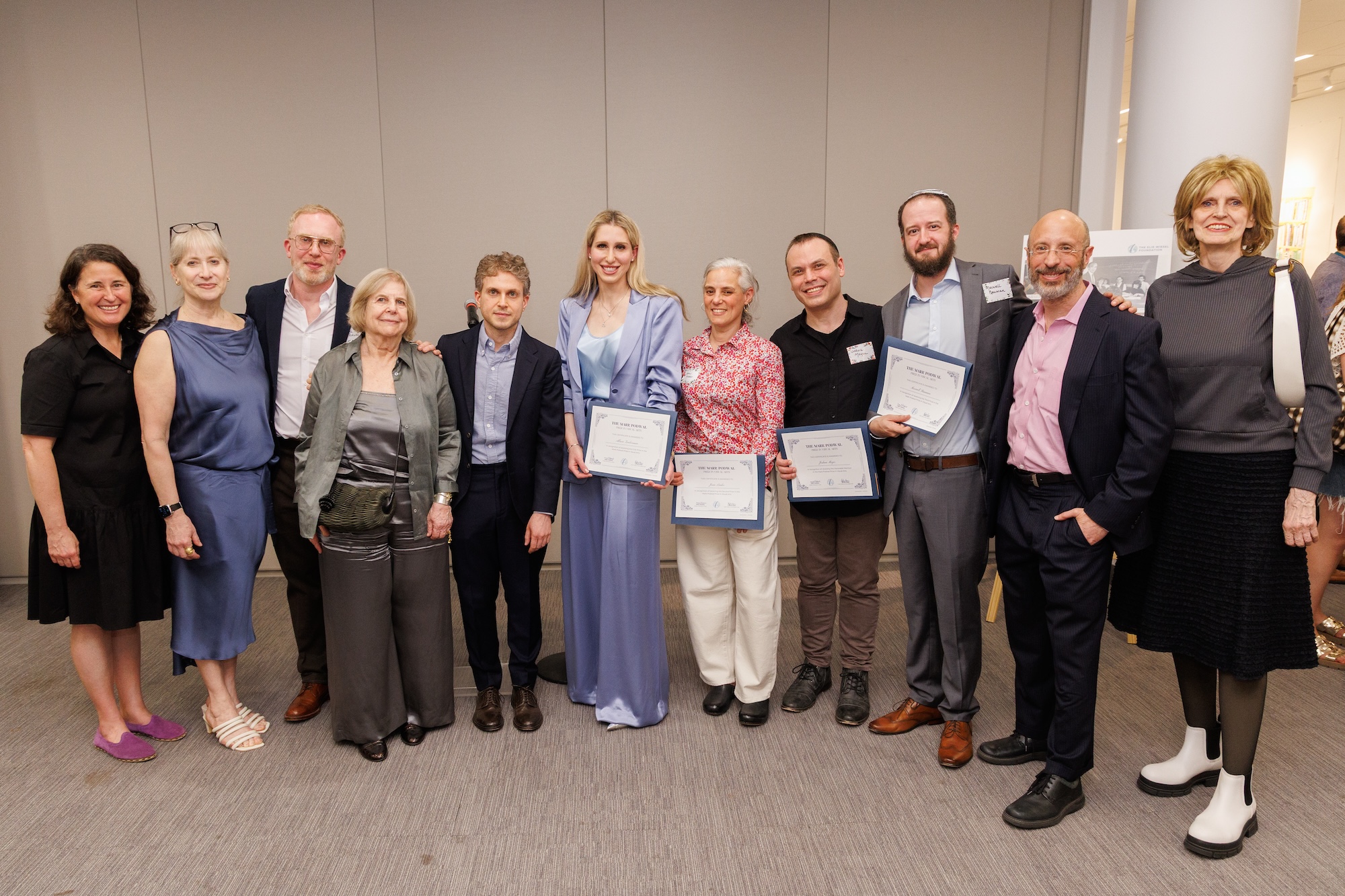
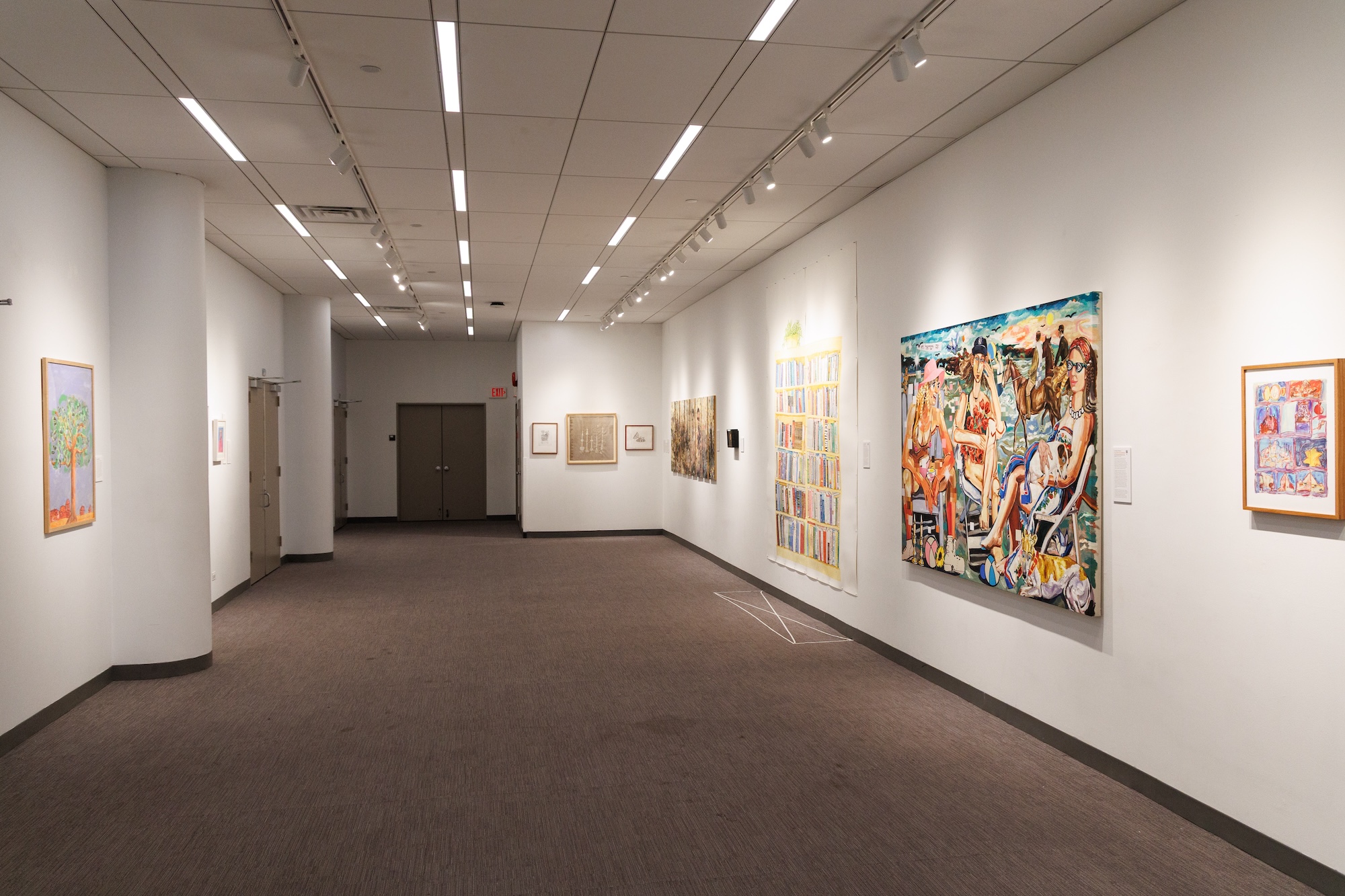
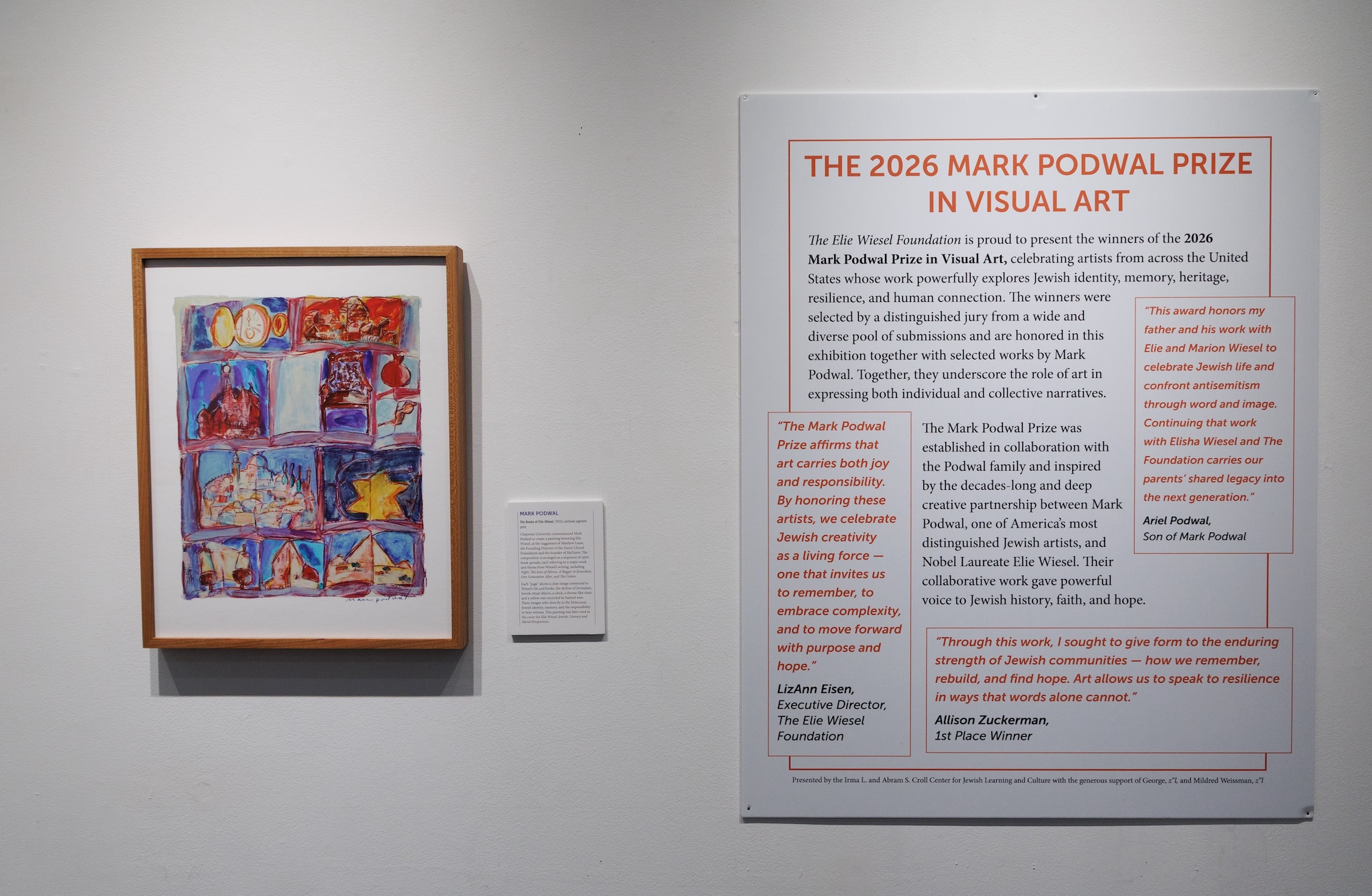
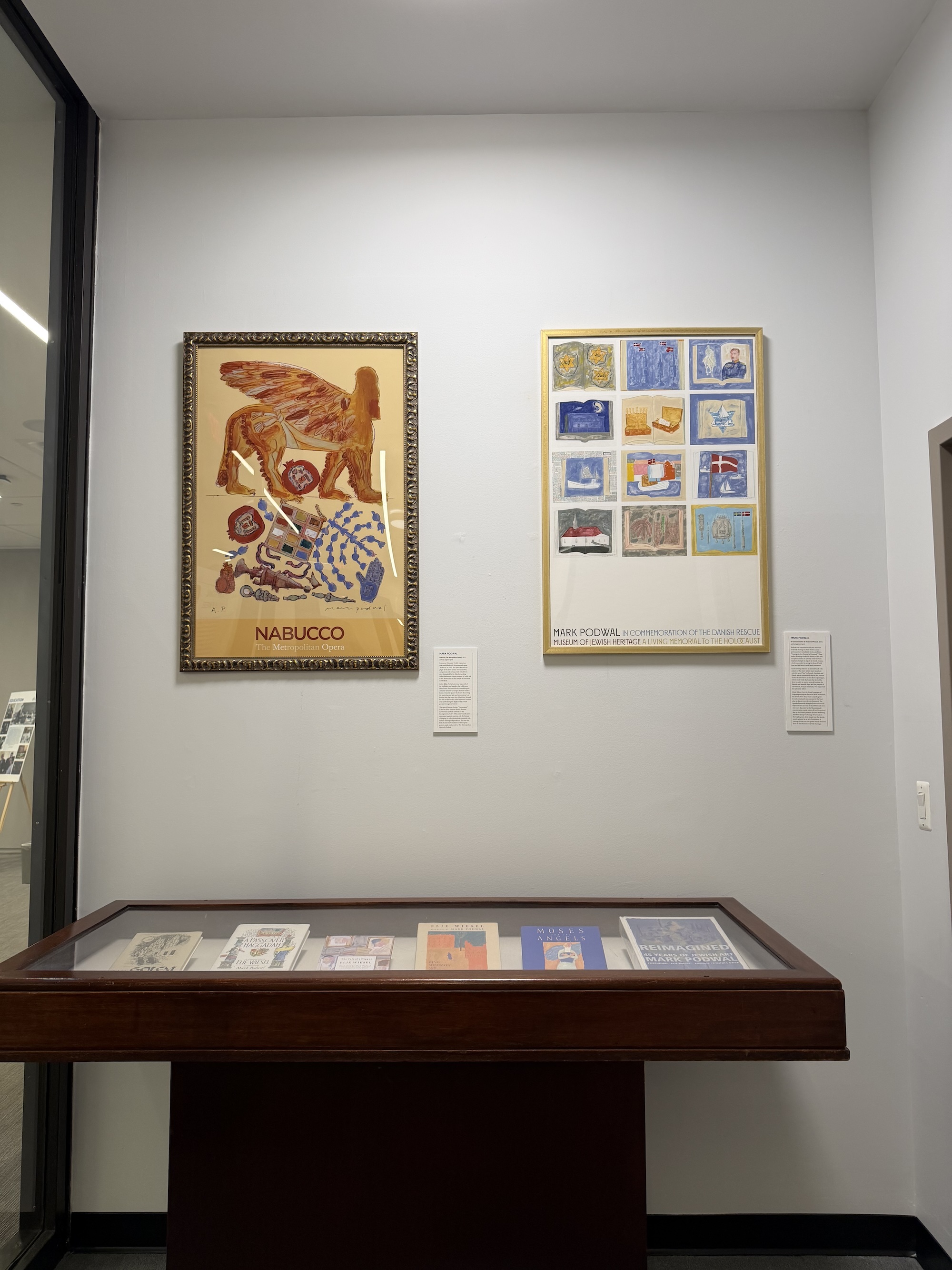
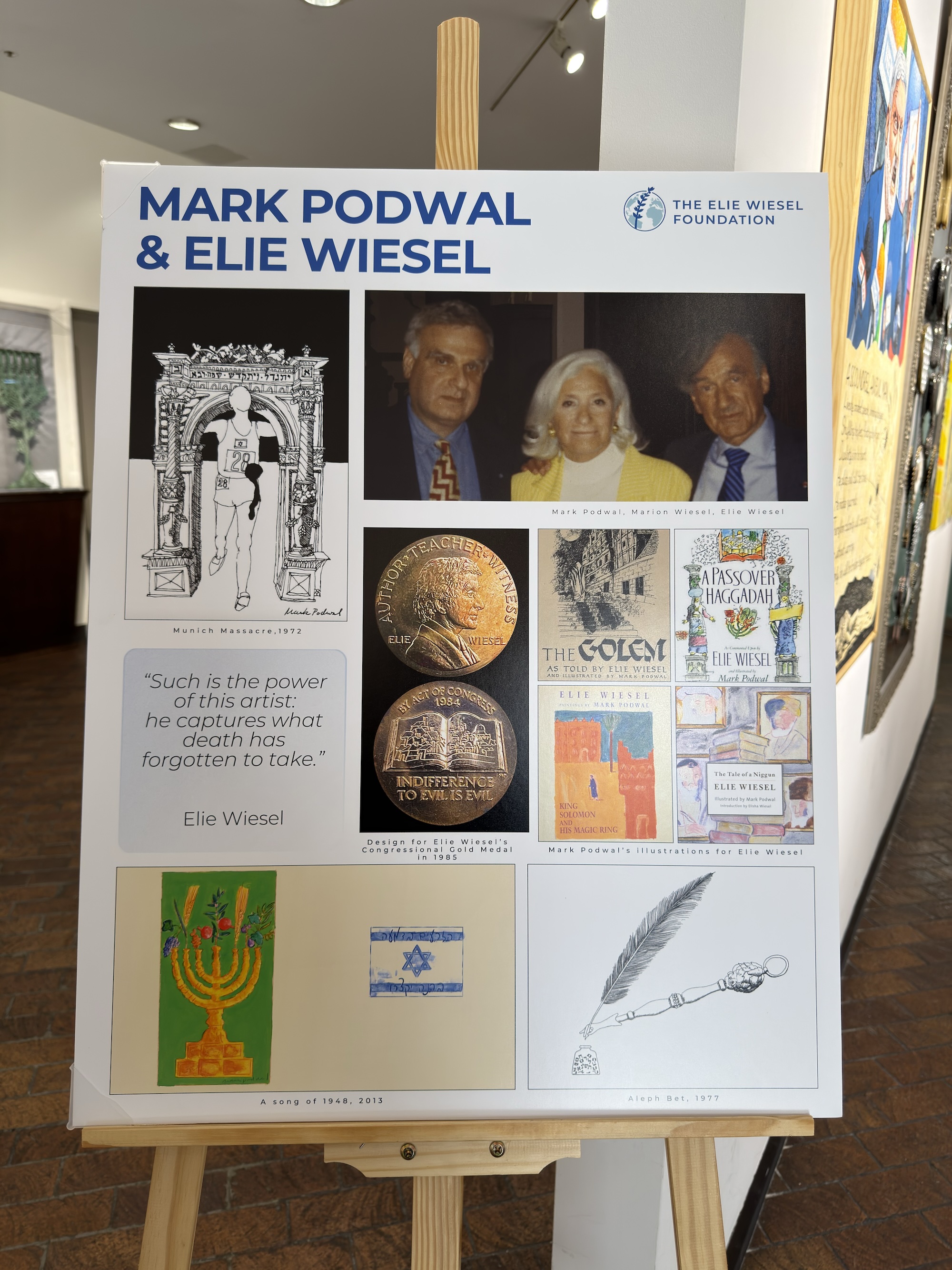
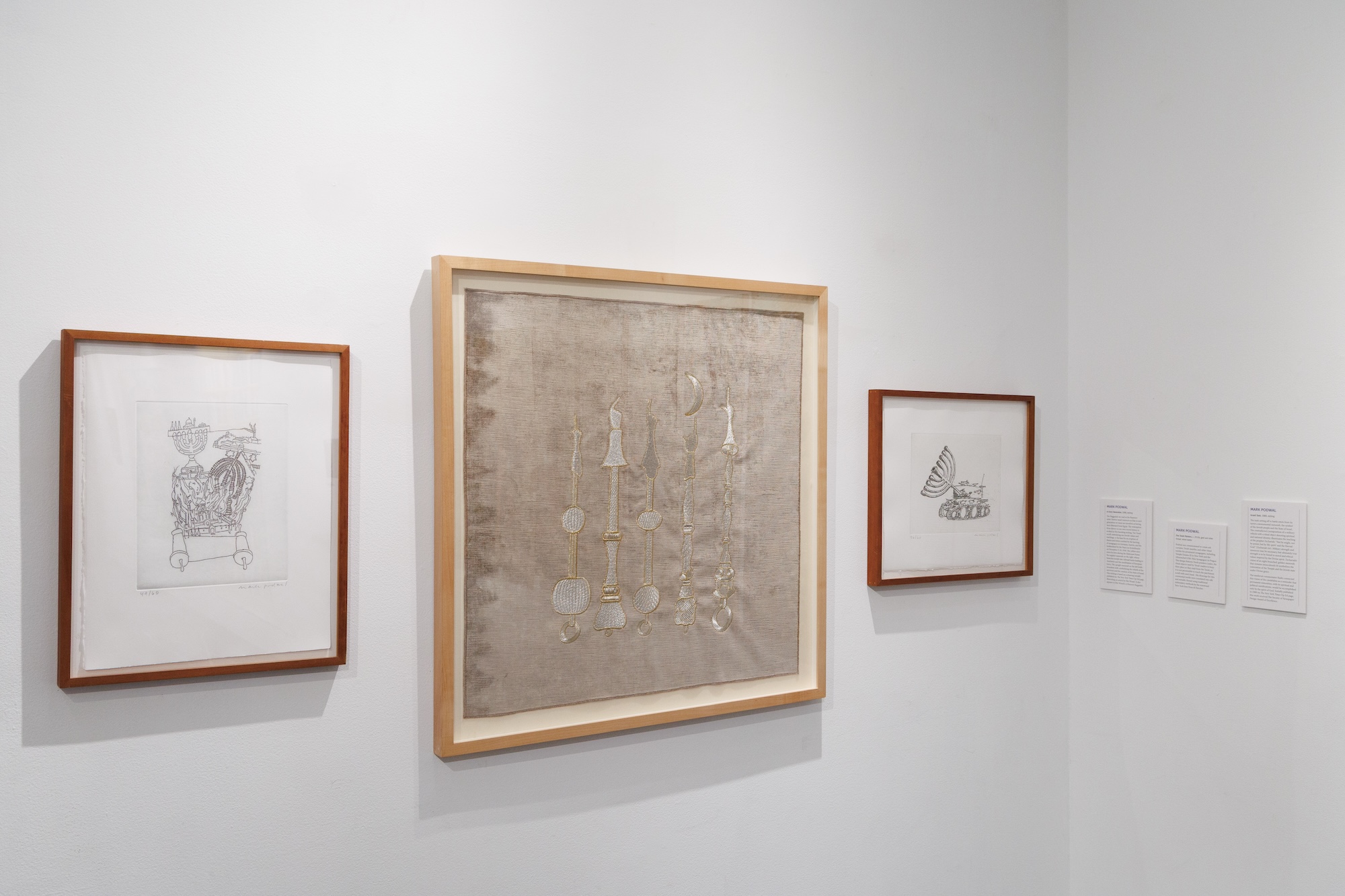
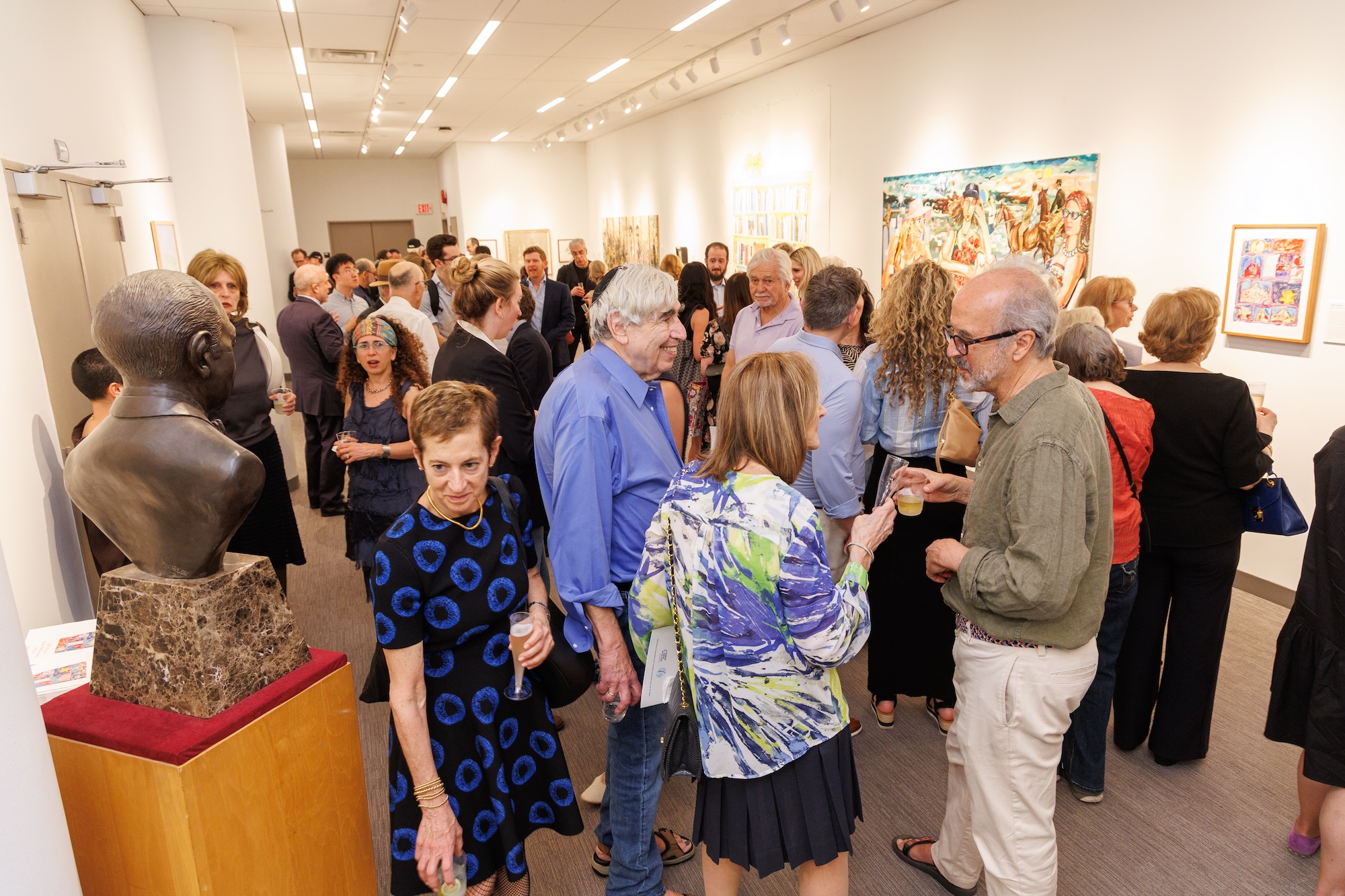
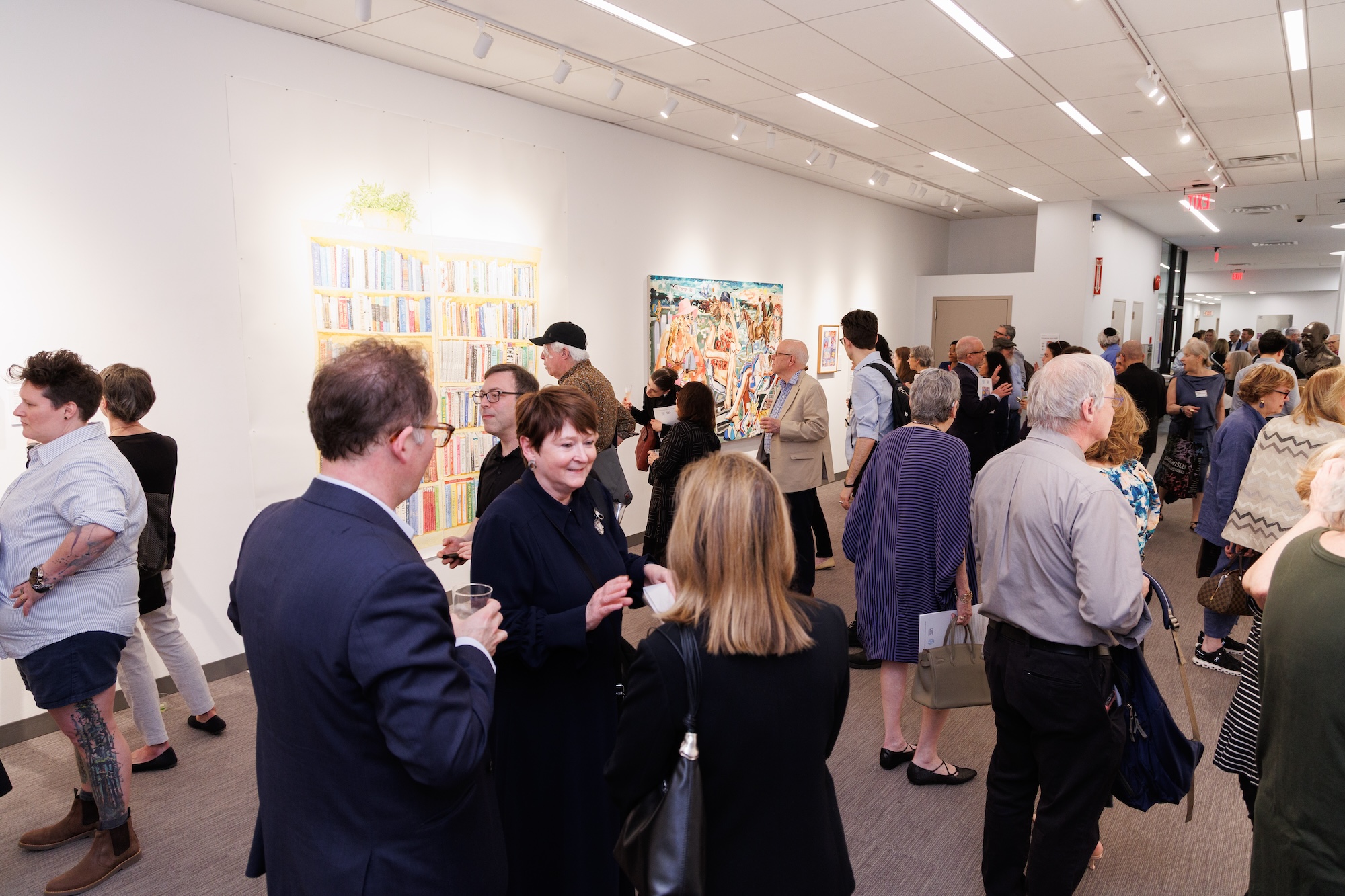
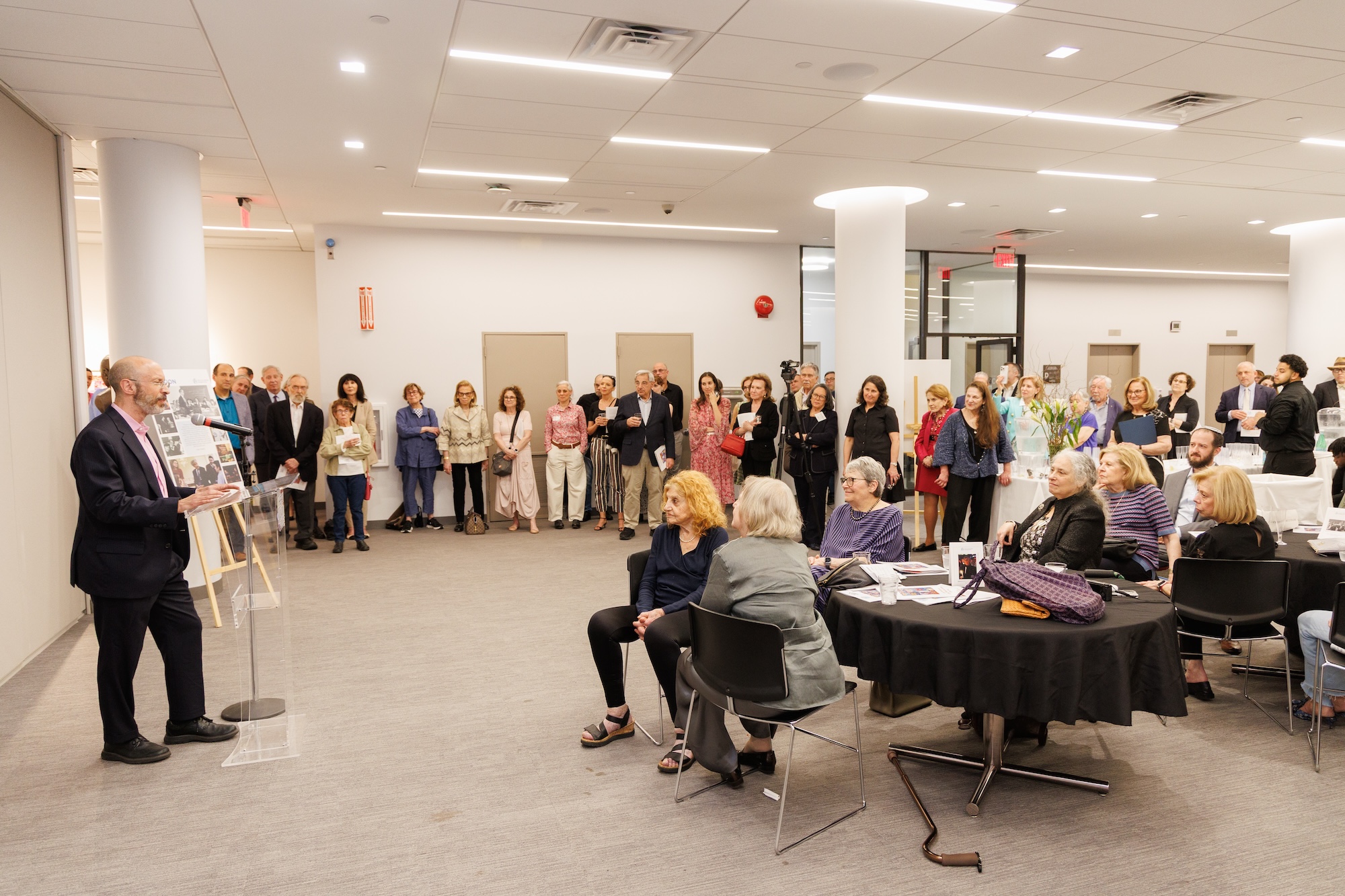
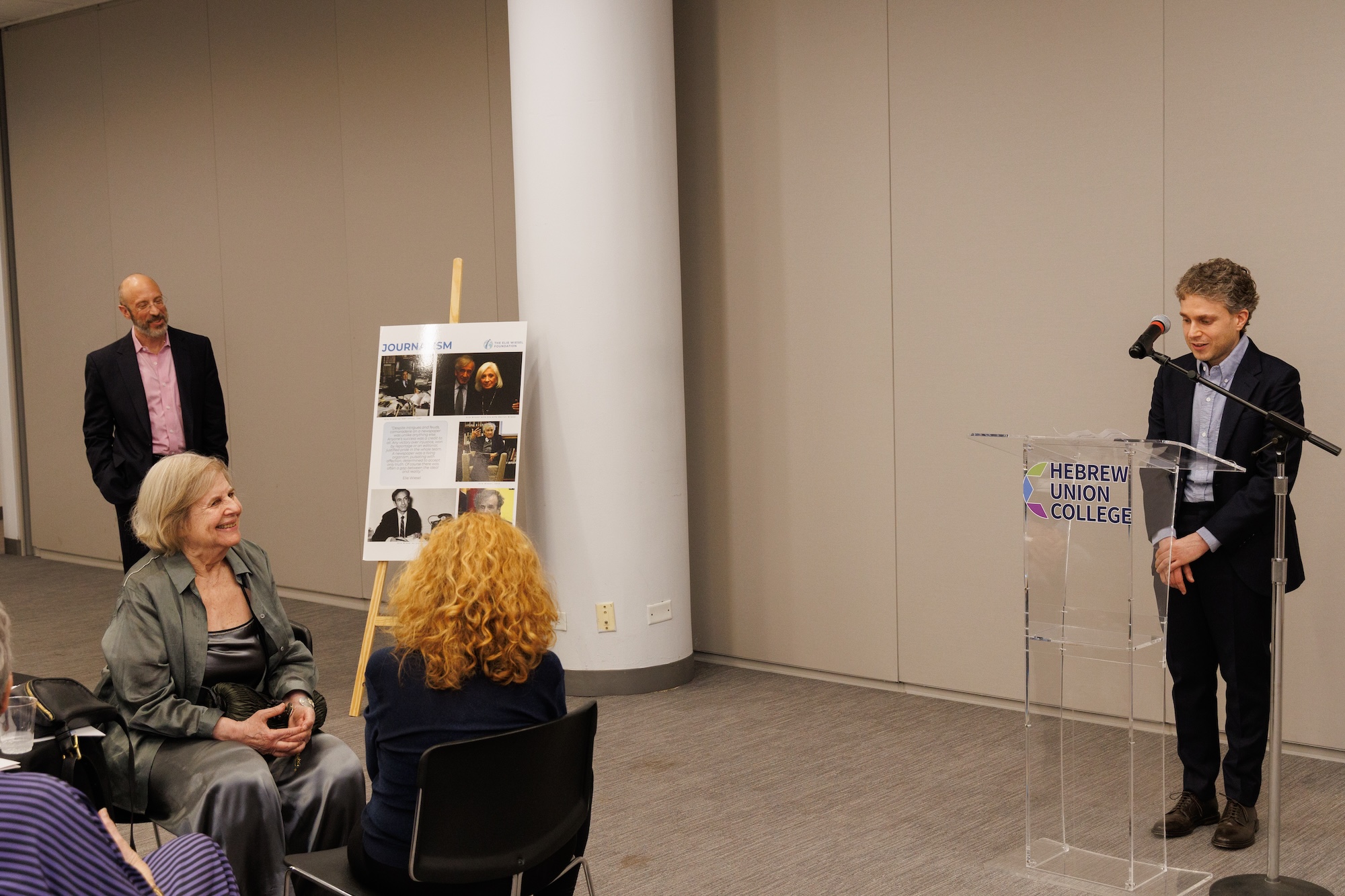
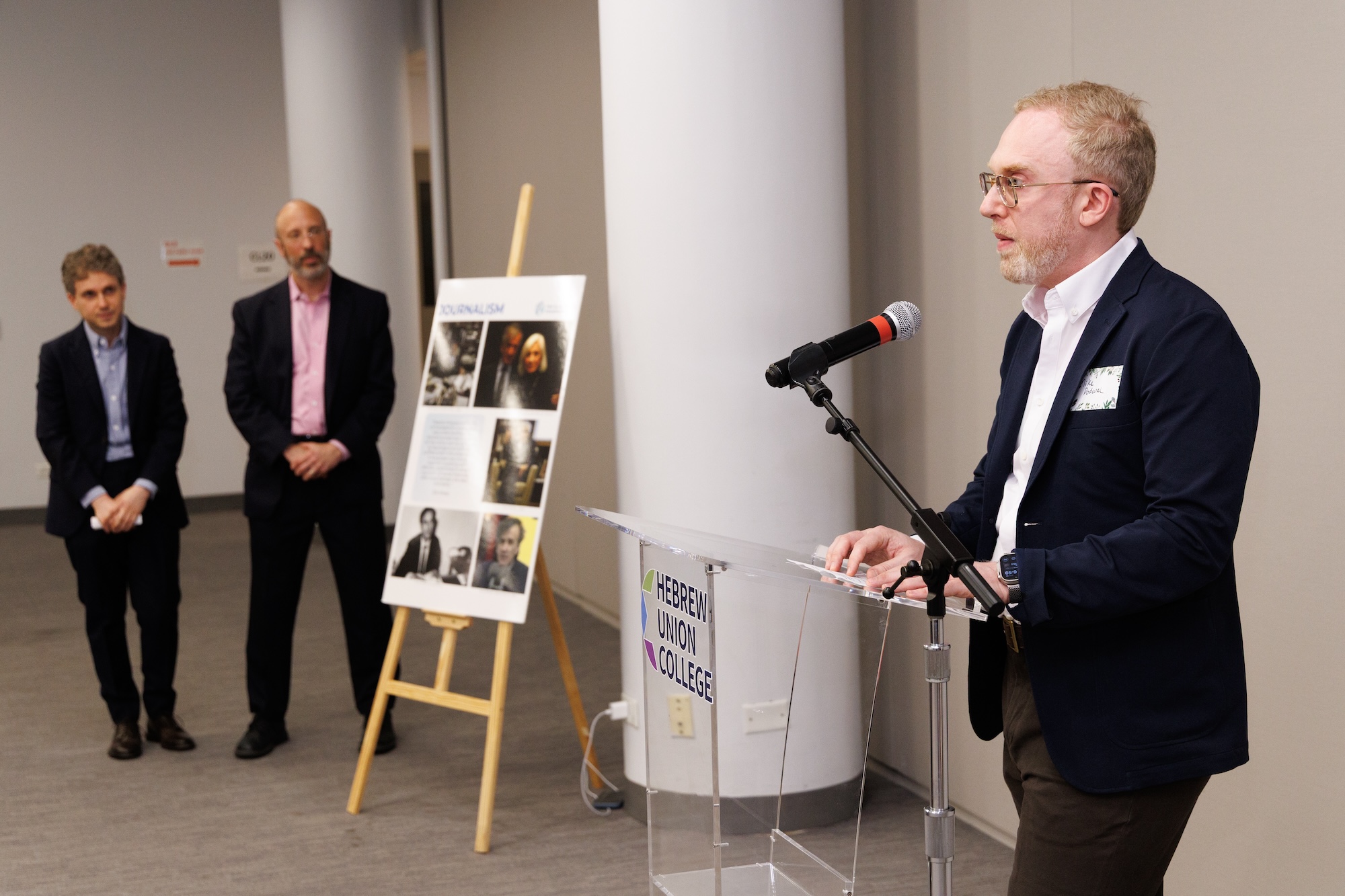
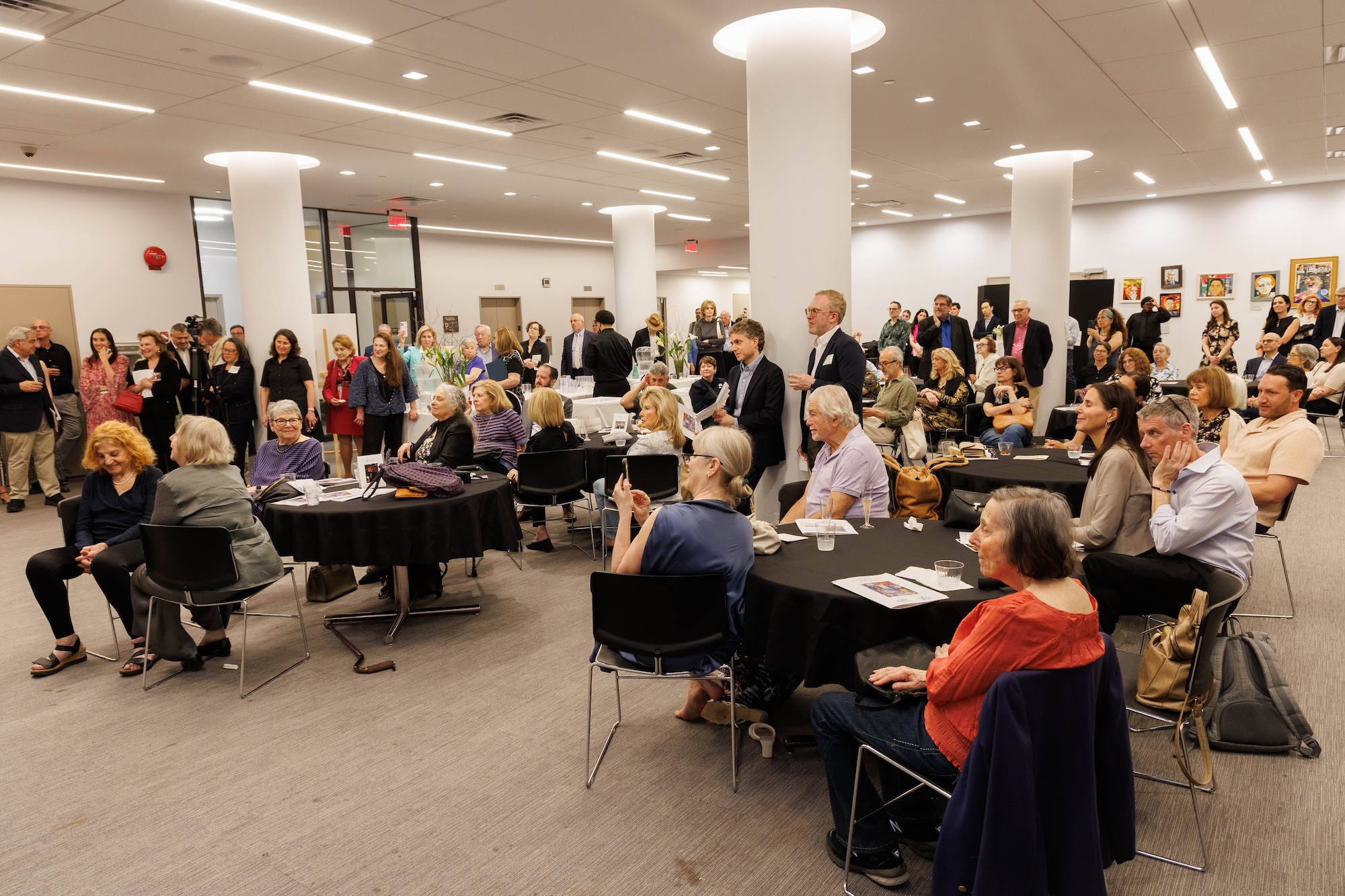
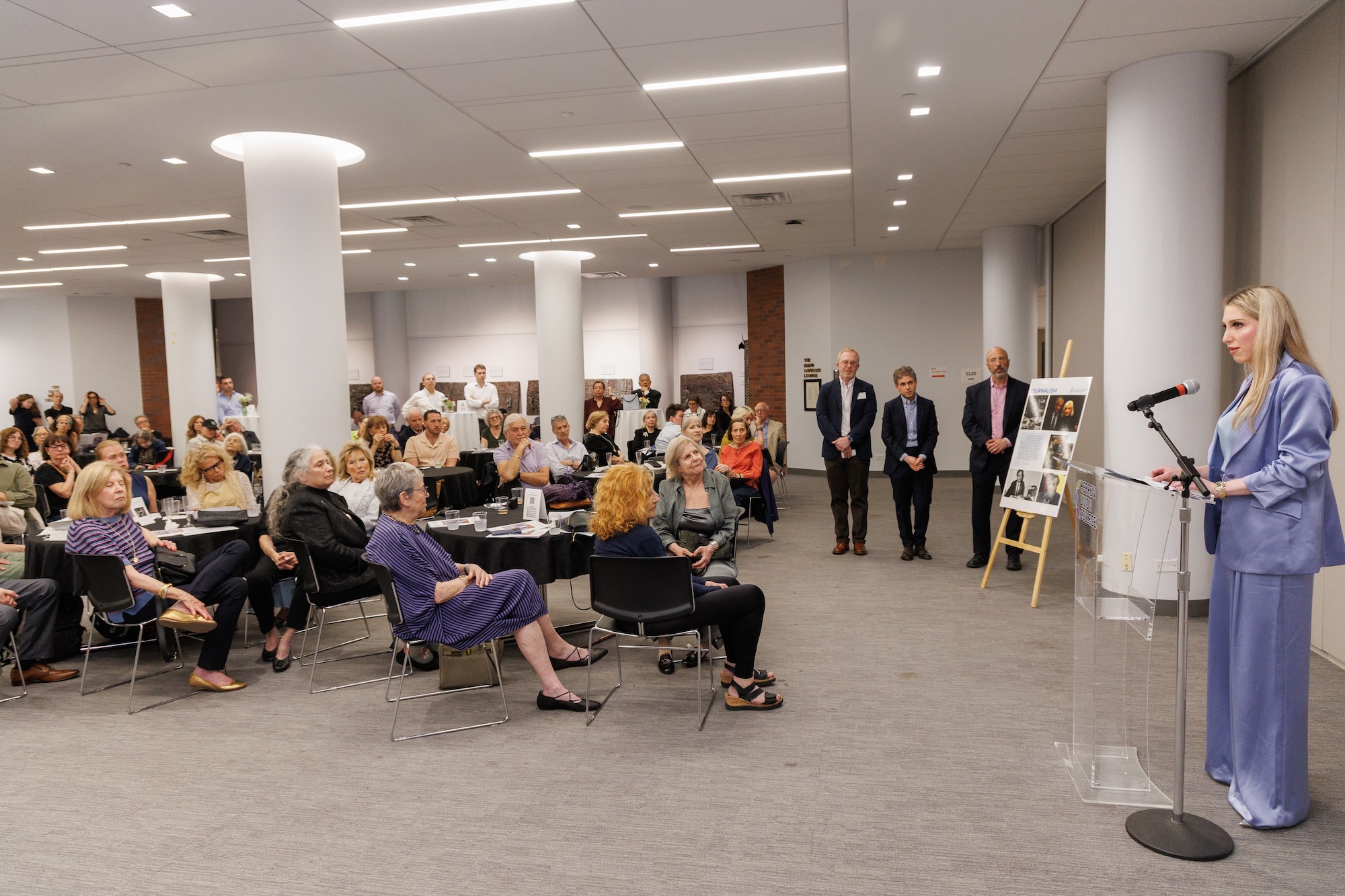
The prize, established in collaboration with the Podwal family and inspired by the deep creative partnership between Mark Podwal, one of America’s most distinguished Jewish artists, and Nobel Laureate Elie Wiesel, encourages artists to respond to themes central to Jewish life and culture through visual art. The winners were exhibited at Dr. Bernard Heller Museum at Hebrew Union College in New York.

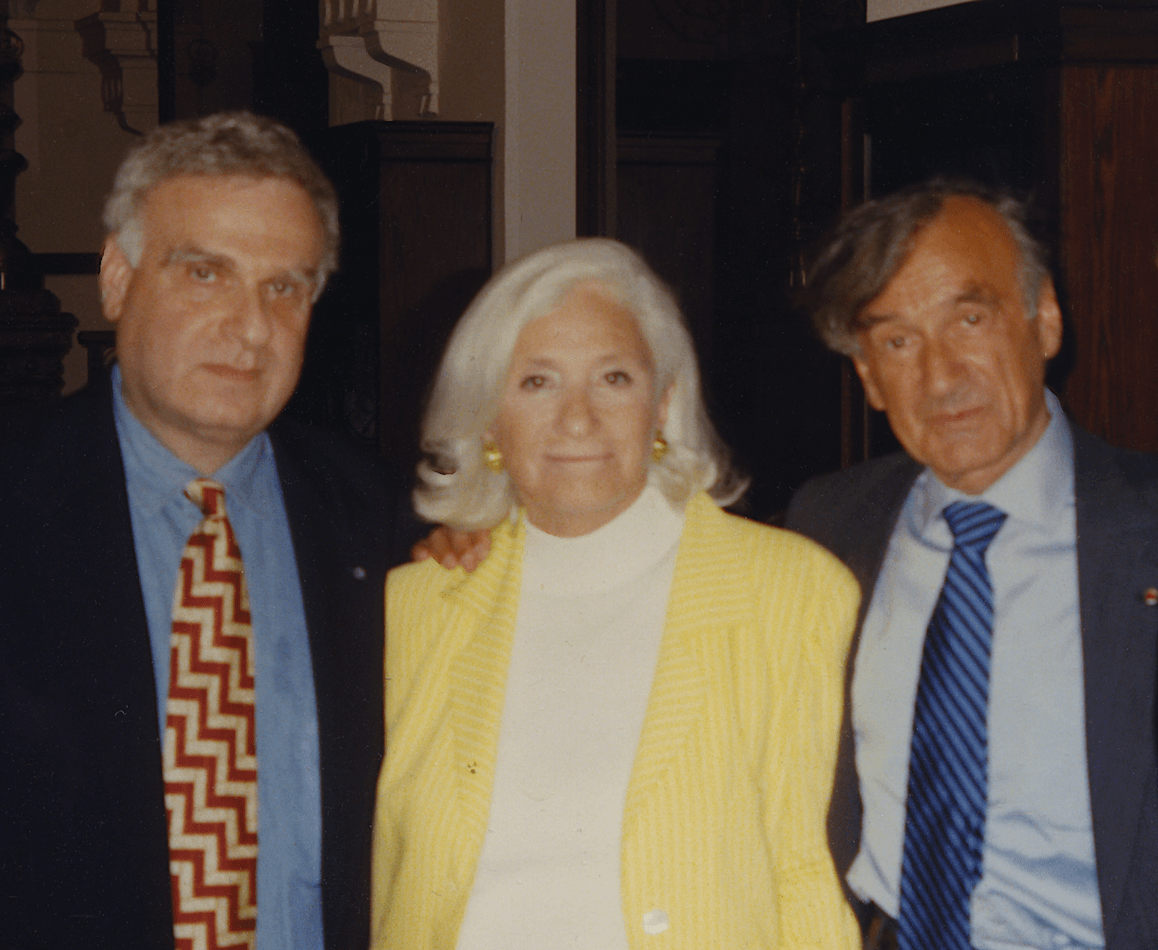
Ariel Podwal, son of Mark Podwal, said “This award honors my father and his work with Elie and Marion Wiesel to celebrate Jewish life and confront antisemitism through word and image. Continuing that work with their son Elisha Wiesel and The Foundation carries our parents’ shared legacy into the next generation.”

LizAnn Eisen, Executive Director of The Elie Wiesel Foundation, said “The Mark Podwal Prize affirms that art carries both joy and responsibility. By honoring these artists, we celebrate Jewish creativity as a living force — one that invites us to remember, to embrace complexity, and to move forward with purpose and hope.”

Allison Zuckerman, first place winner, described the role of art in expressing Jewish resilience: “Through this work, I sought to give form to the enduring strength of Jewish communities — how we remember, rebuild, and find hope. Art allows us to speak to resilience in ways that words alone cannot.”

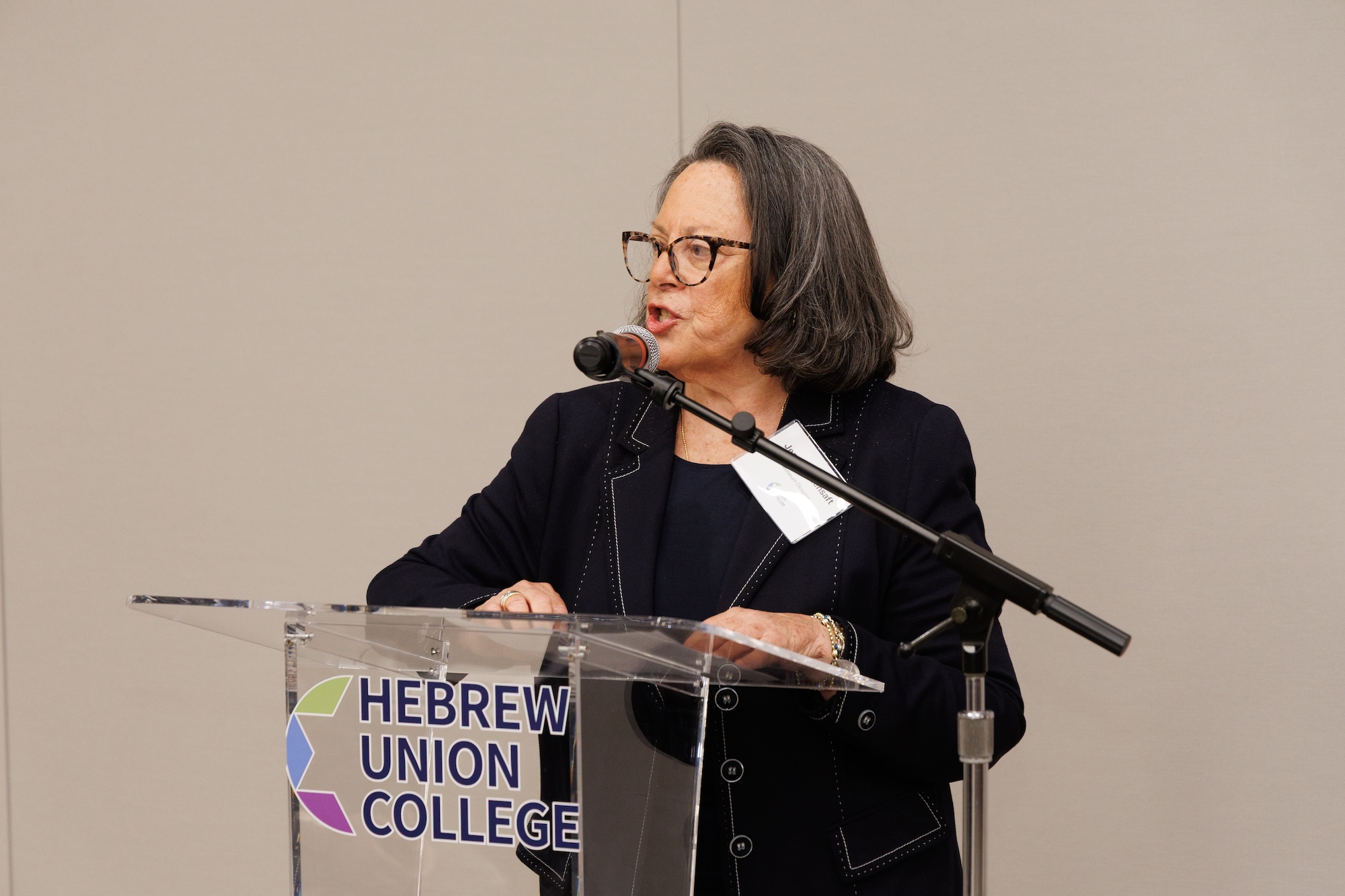
Jean Bloch Rosensaft, Director of the Heller Museum, explained, “Mark Podwal’s creativity encompassed the full scope of human emotion and Jewish experience – from witty celebration to tragic remembrance and mystical redemption. The Podwal Prize-winning artists are sustaining his legacy of transmitting Jewish heritage, enriching Jewish culture, and perpetuating memory for future generations.”


Elie Wiesel Foundation: Mark Podwal Prize

Hebrew Union College: Exhibition

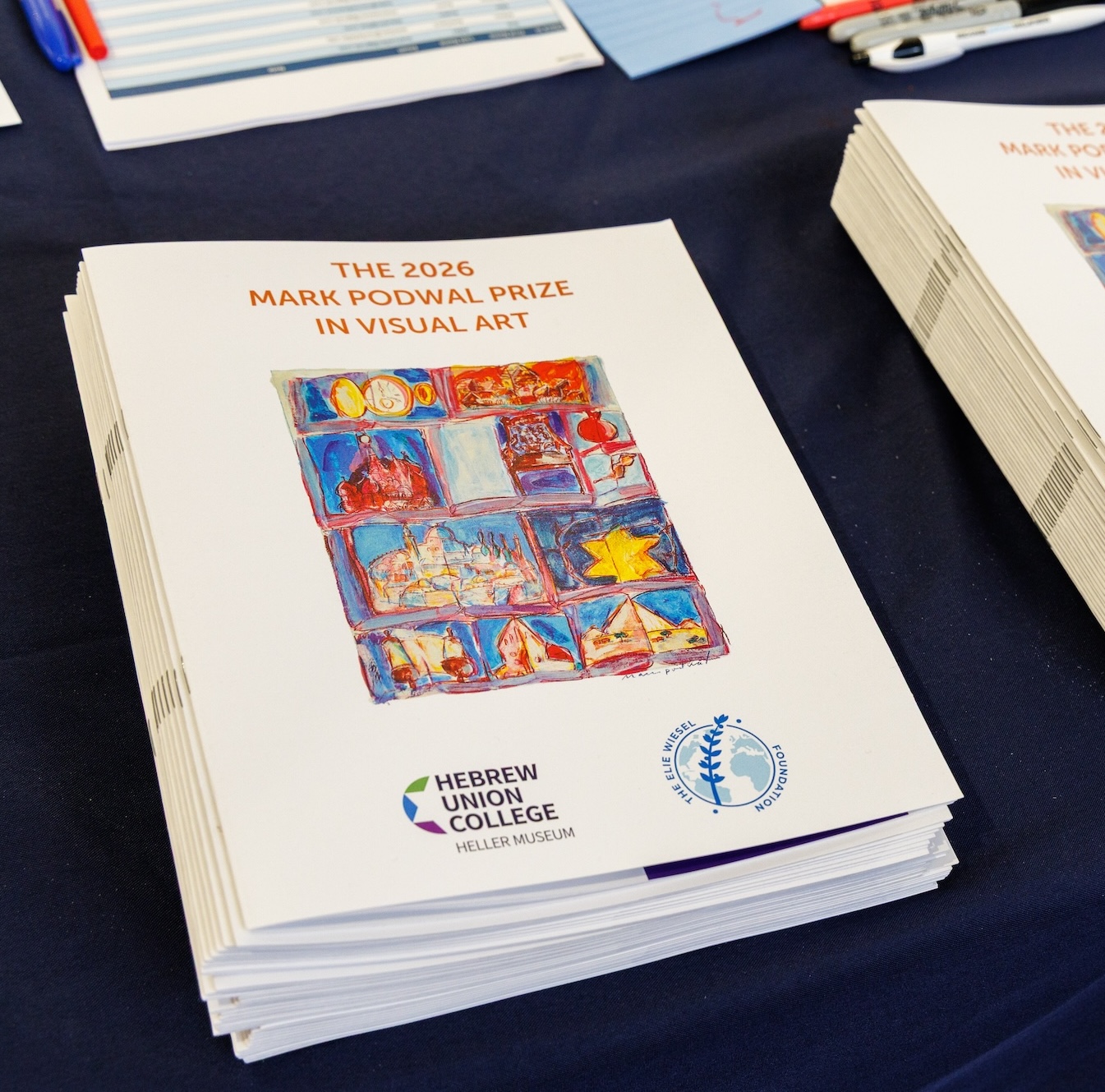
Exhibition: Catalogue

Award Ceremony and Speeches: Video

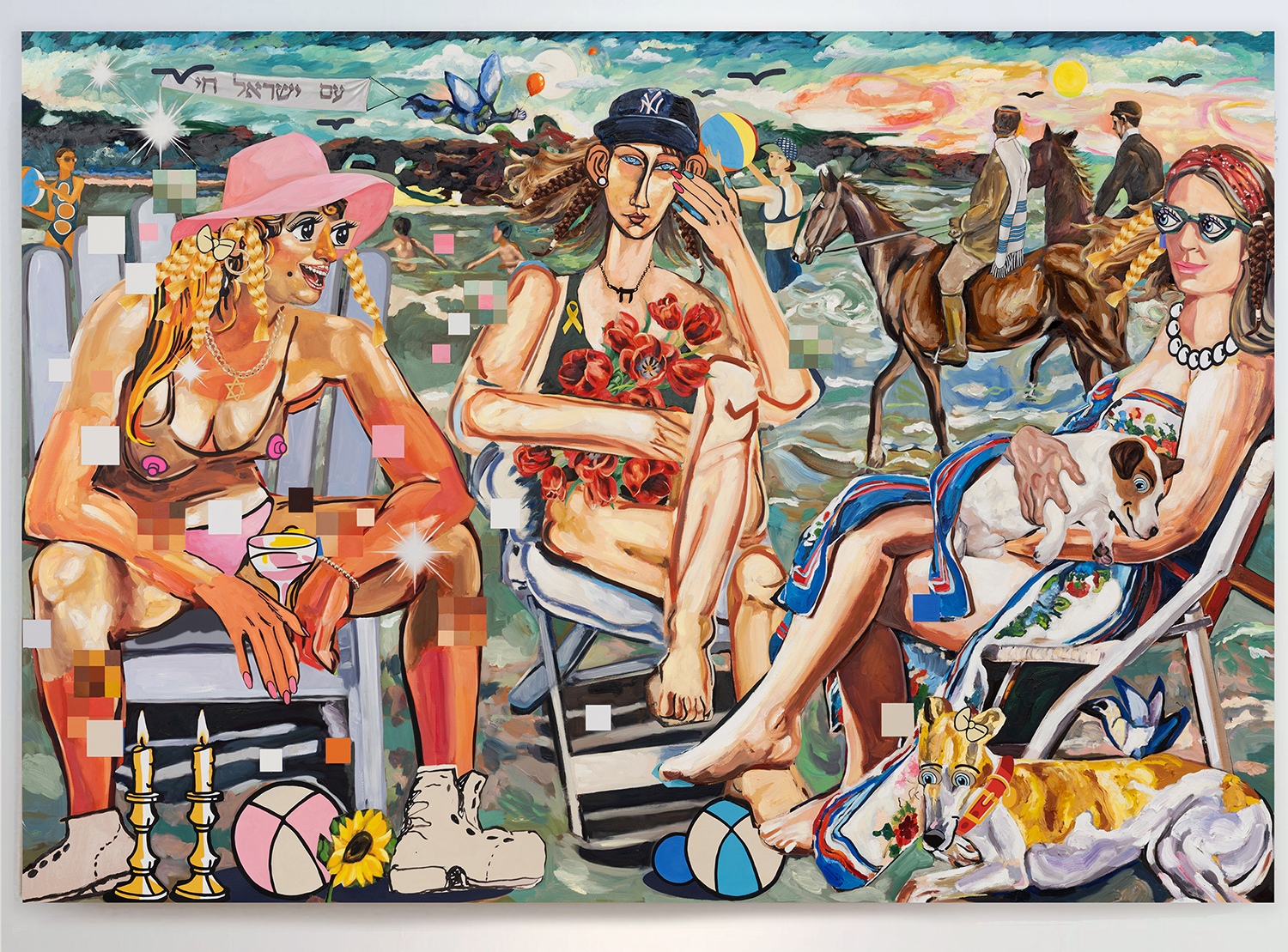
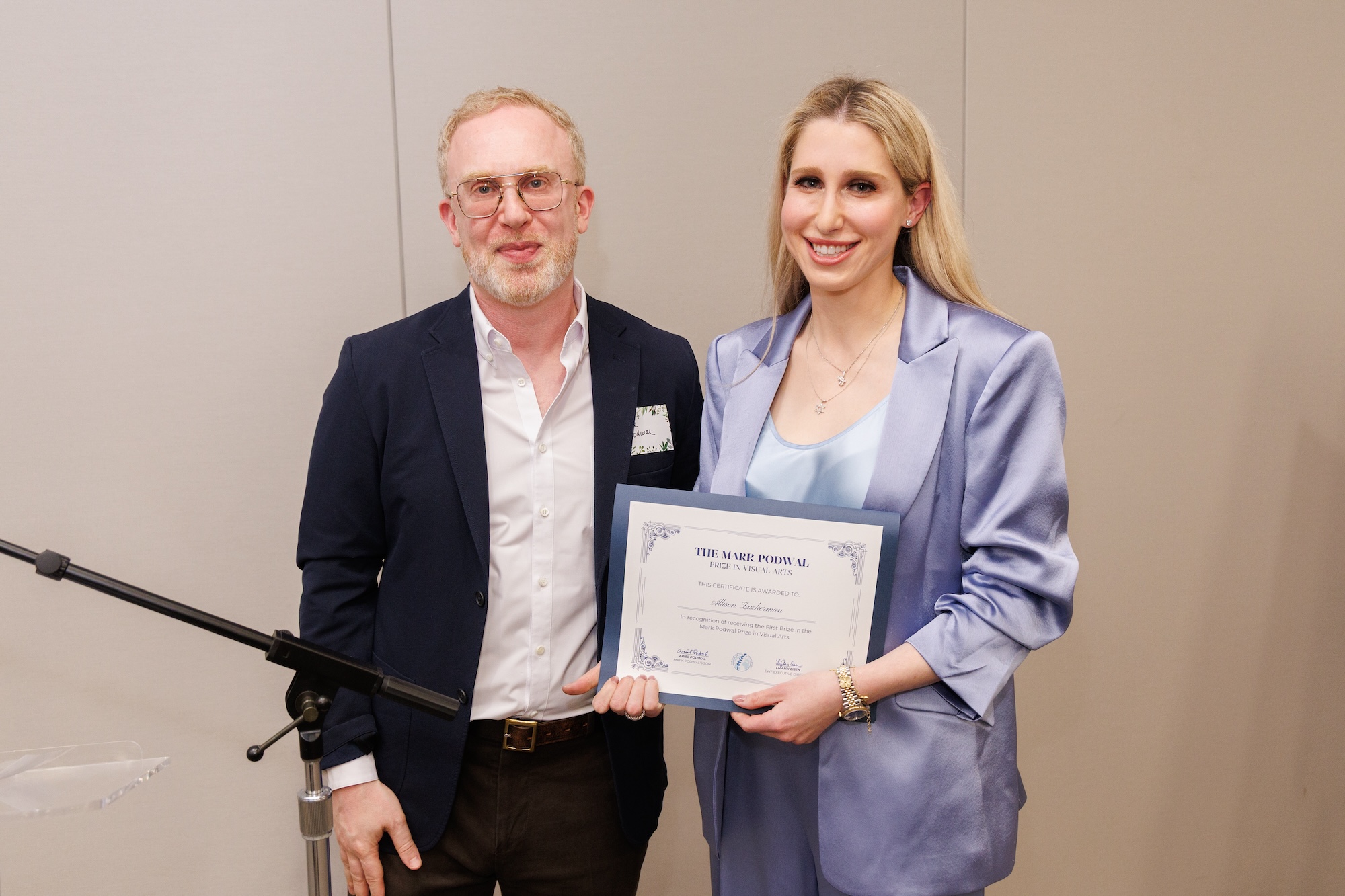
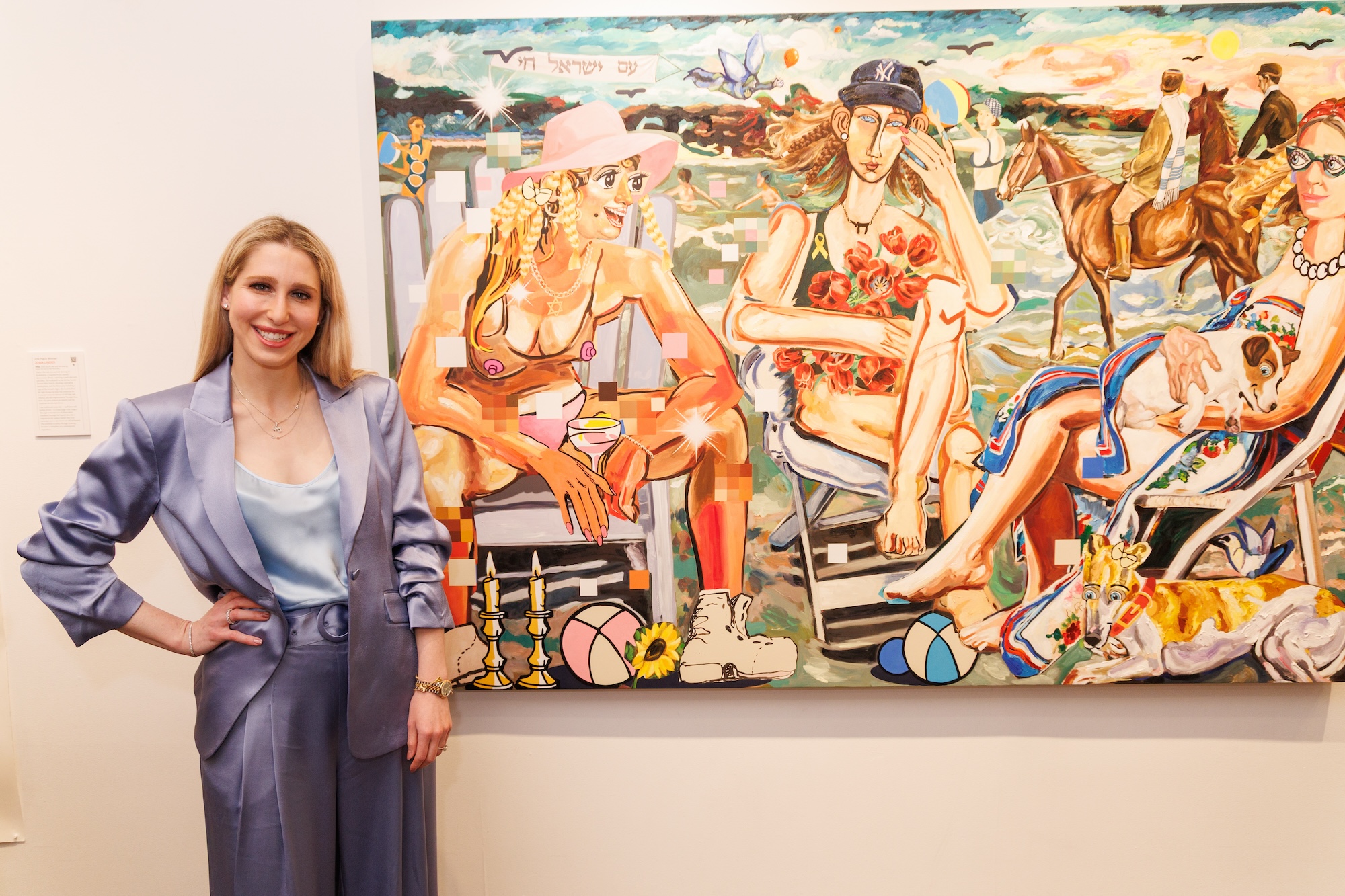
1st Prize: Allison Zuckerman
Even a Flood Could Not Wash the Flame Away, 2025, oil on canvas, 58" x 84"

The word "flood" in this title nods to the October 7th massacre and the painting answers with light. Stitched across the sky, a banner reads "Am Yisrael Chai": the people of Israel live. Orange balloons keep vigil for the Bibas family and, by extension, all hostages. A yellow ribbon rests over the central figures chest, an emblem of solidarity and hope.

The figures on horseback reference Max Liebermann's painting Two Riders on the Beach (1901). This painting was stolen after Kristallnacht from the collection of David Friedmann, a Jewish collector, and later held by Hildebrand Gurlitt, Hitler's art dealer. In 2015 it was formally restituted to Friedmann's great nephew, his closest heir (as his wife and daughter perished in the Holocaust). This rare victory speaks to the ongoing struggle to recover the 100,000 Nazi looted artworks and affirms that justice, though delayed, can prevail.

Jewish artists Liebermann, Guston, Altman, Pearlstein, Kisling, Soutine, Rivers, Modigliani, Katz, Freud, and Lichtenstein are all honored throughout the painting. At lower left, Lichtenstein's Shabbos candlesticks steadily burn, an eternal flame no flood can quench.
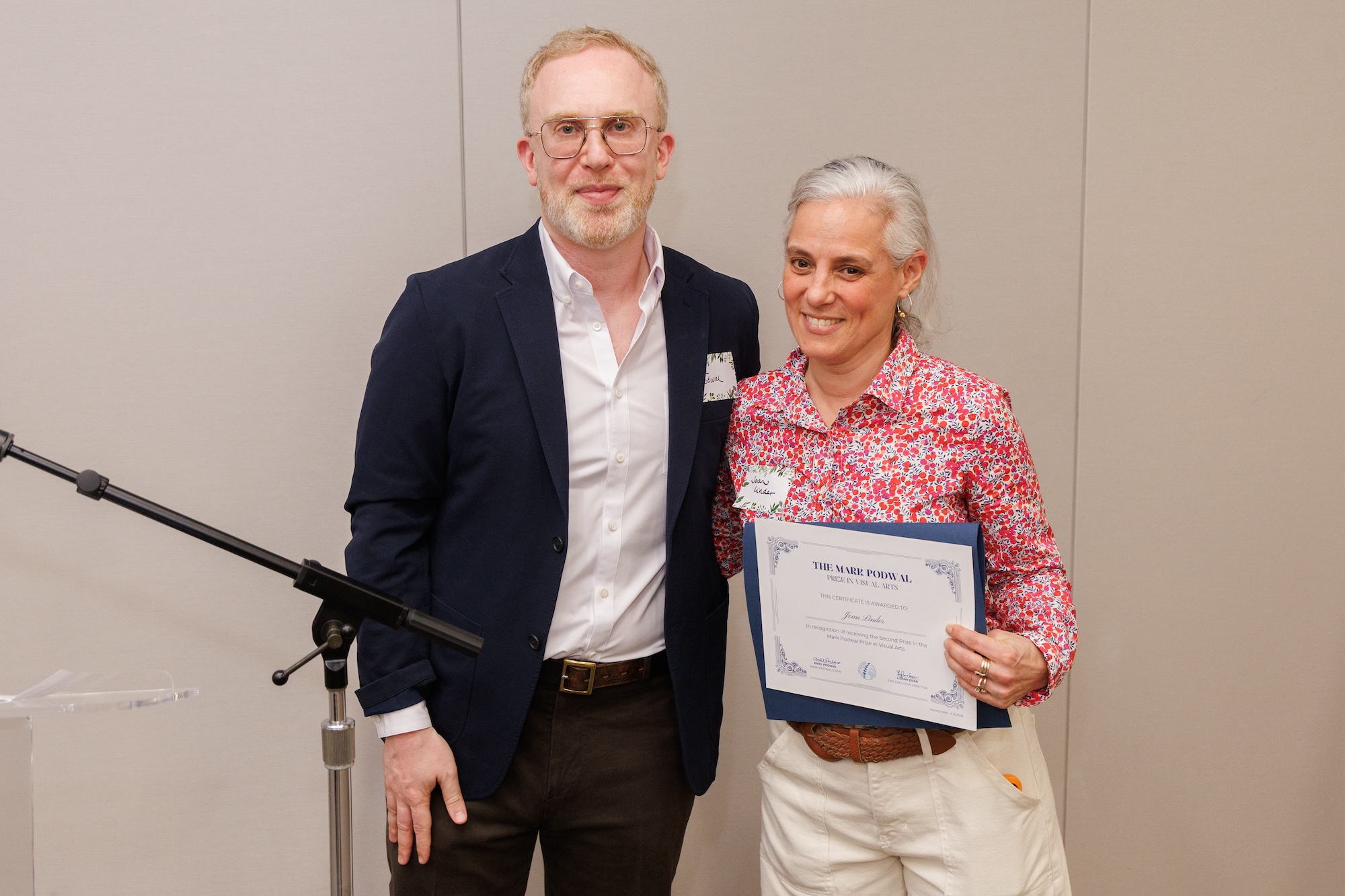
2nd Prize: Joan Linder
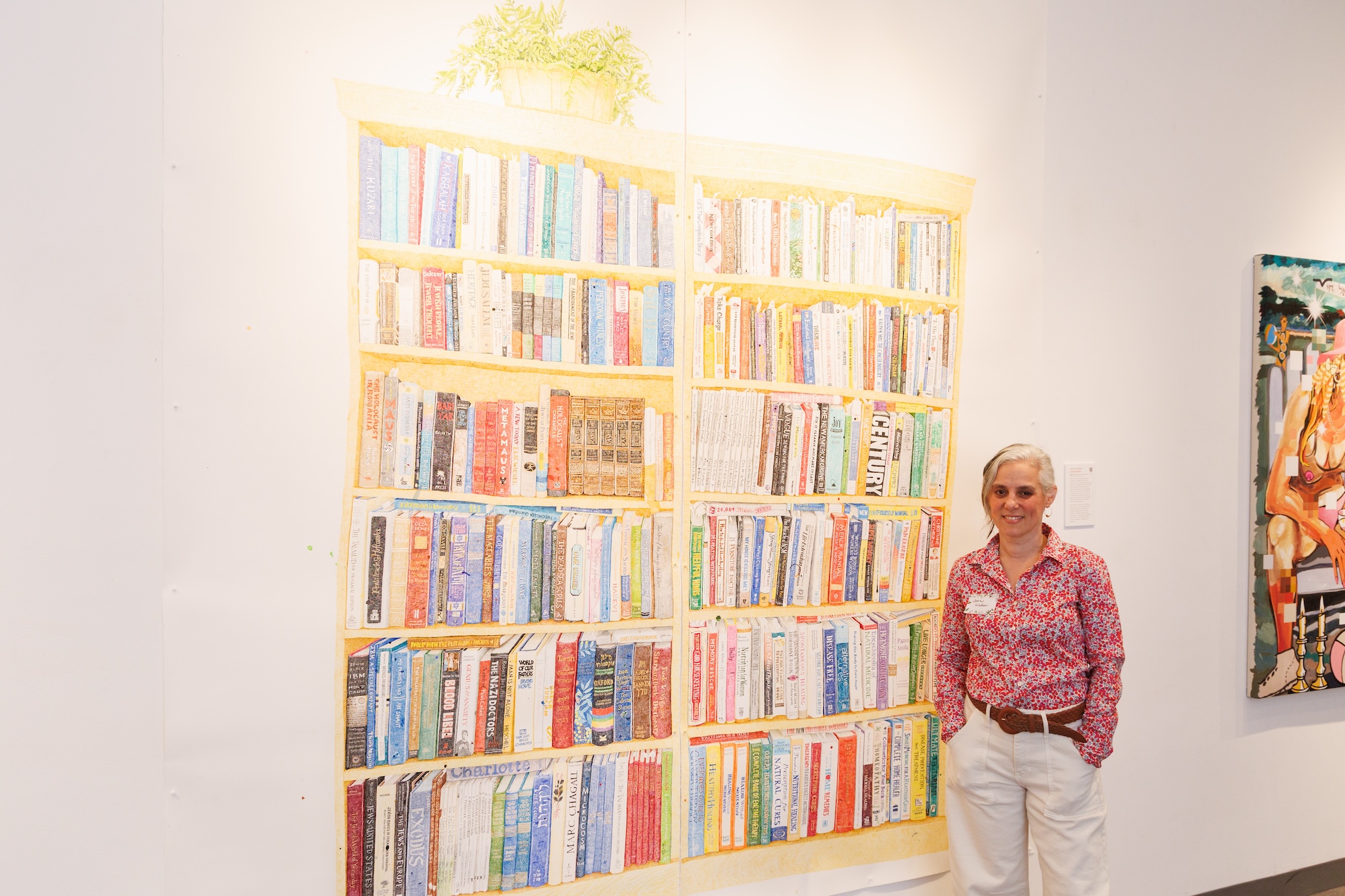
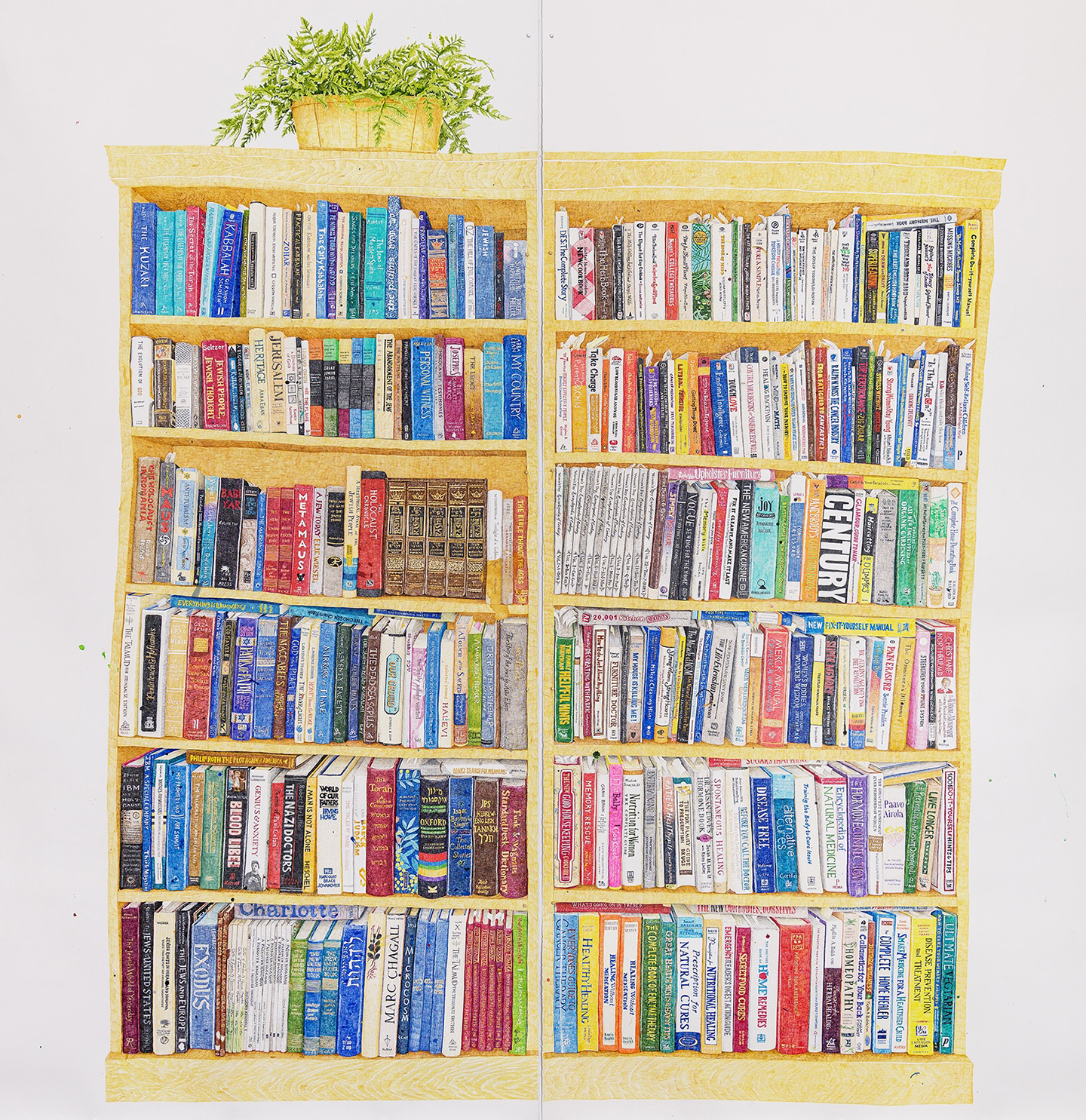
Titled, 2022-2024, pen and ink, 110" x 110"

This life-size pen and ink drawing of bookshelves is based on my parents' idiosyncratic library and captures a particular time and place, now history itself. The bookshelf on the left has titles on Judaism, Jewish identity, Jewish history, the Holocaust, Israel, liturgy, literature, poetry, theology, spirituality, and antisemitism. The bookshelf on the right focuses on post-war American do-it-yourself domestic themes: self-help, self-reliance, self-improvement, home improvement, homemaking, heath, nutrition, and language. A fern sits atop the shelf of Jewish books. Through text, this piece reflects on identity and the American Jewish experience in a post-Holocaust era. This drawing brings together my interest in domestic space, gender roles, and experience as an American child and grandchild of Holocaust survivors.

In a culture hyper-saturated by electronic imagery, I use traditional materials - quill pens and bottles of ink - to create large-scale images, exploring the processes of observation and mark making. Through continual acts of observation translated through the hand, I describe a response to my subject matter that is as contemporary as my means are old-fashioned. This personal scrutiny, through drawing of my immediate surroundings, becomes an examination of a larger contemporary experience.

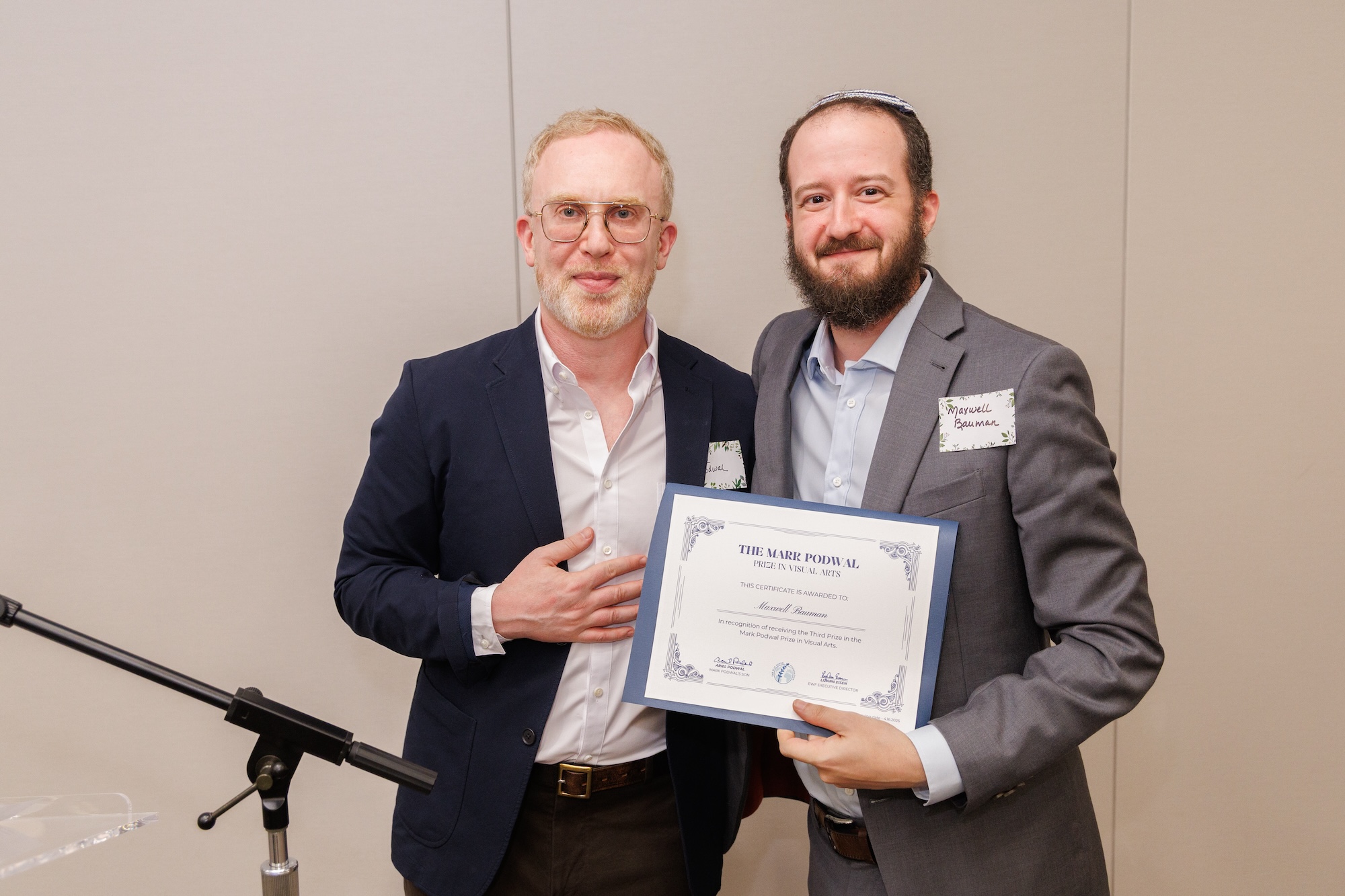
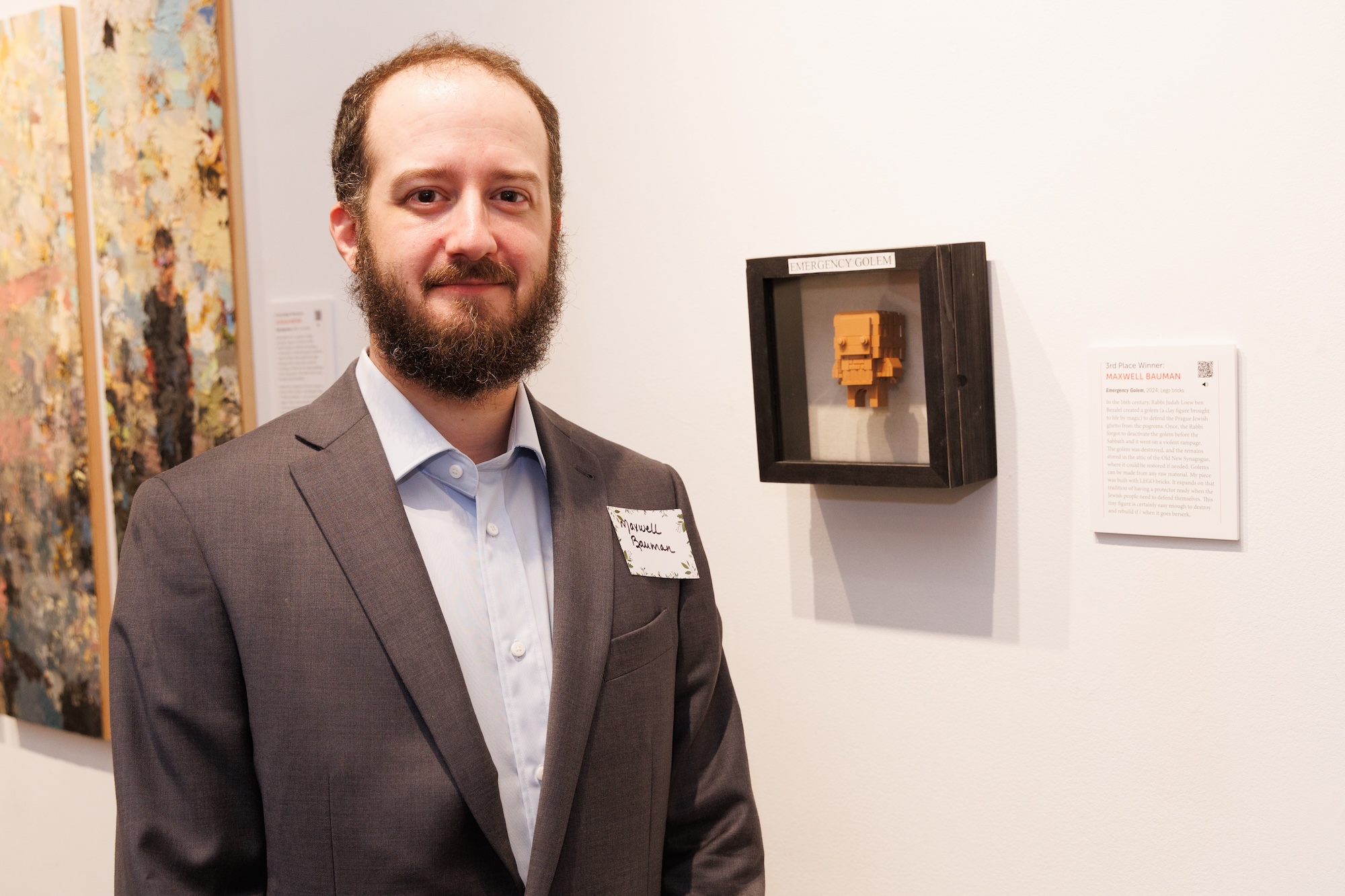
3rd Prize: Maxwell Bauman
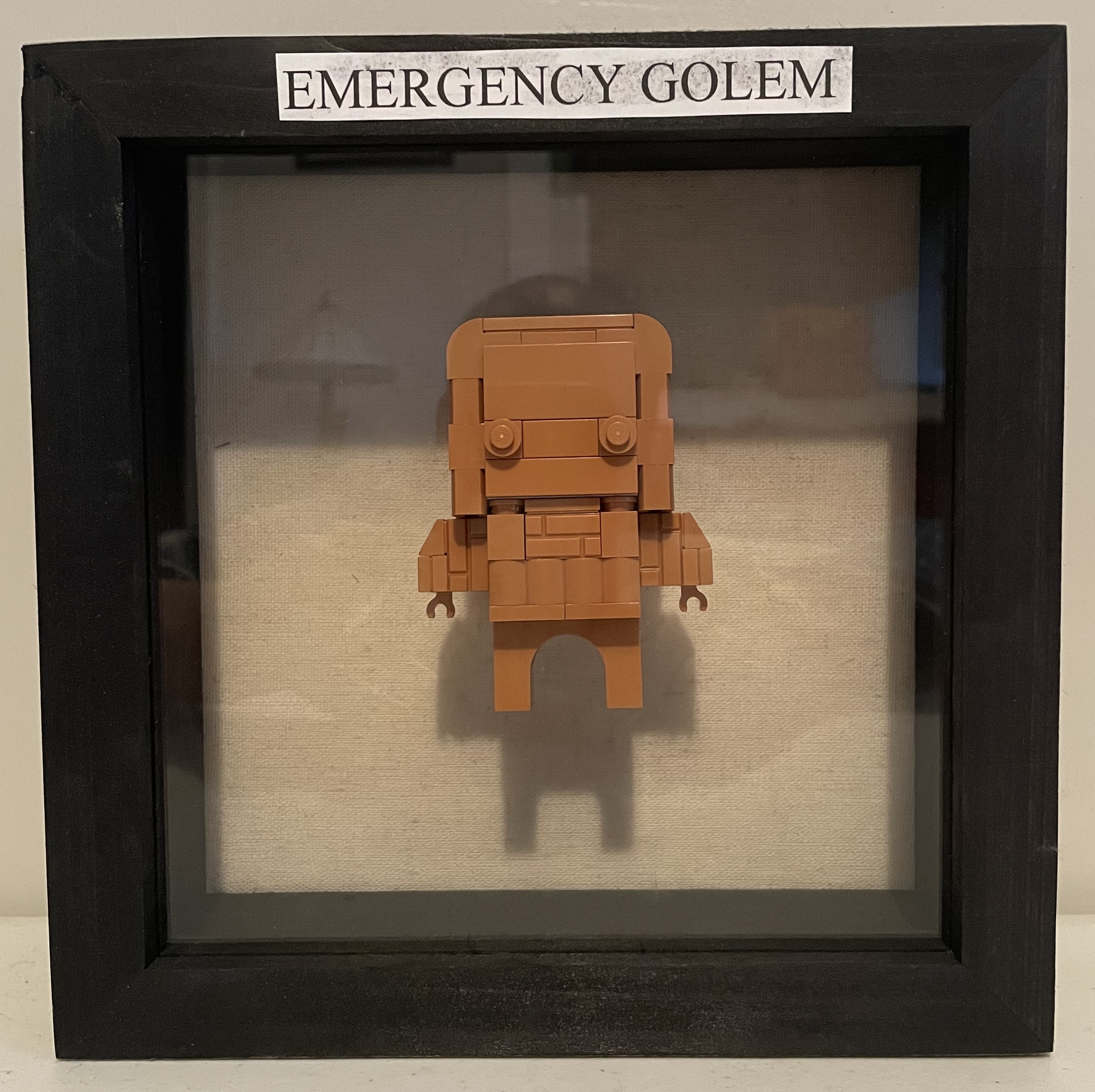
Emergency Golem, 2024, Lego bricks, 8" x 8" x 3"

In the 16th century, Rabbi Judah Loew ben Bezalel created a golem (a clay figure brought to life by magic) to defe the Prague Jewish ghetto from the pogroms. Once, the Rabbi forgot to deactivate the golem before the Sabbath ar went on a violent rampage. The golem was destroyed, and the remains stored in the attic of the Old New Synagog where it could be restored if needed. Golems can be made from any raw material. My piece was built with LEGO bricks. It expands on that tradition of having a protector ready when the Jewish people need to defend themselve: This tiny figure is certainly easy enough to destroy and rebuild if / when it goes berserk.

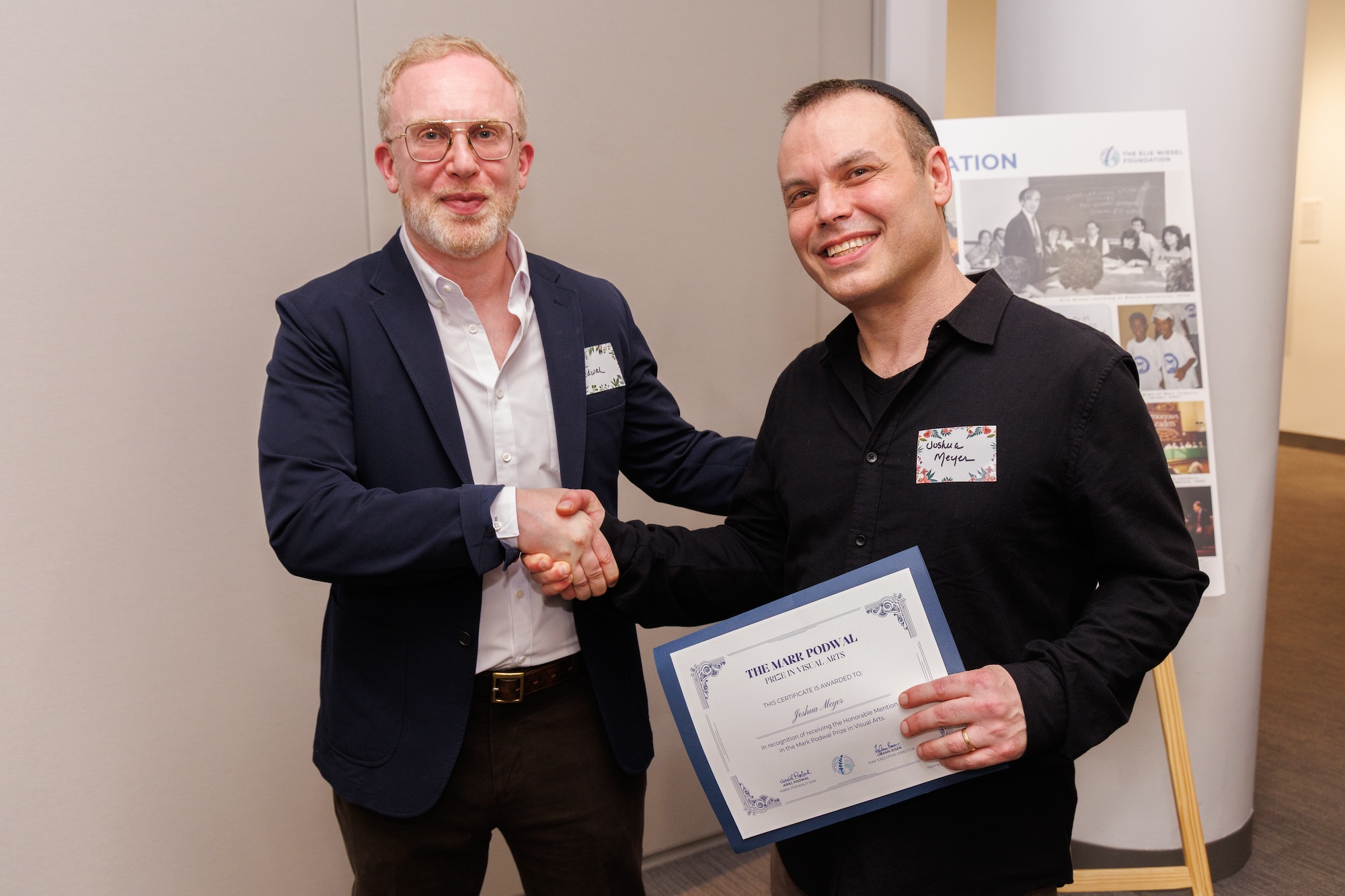
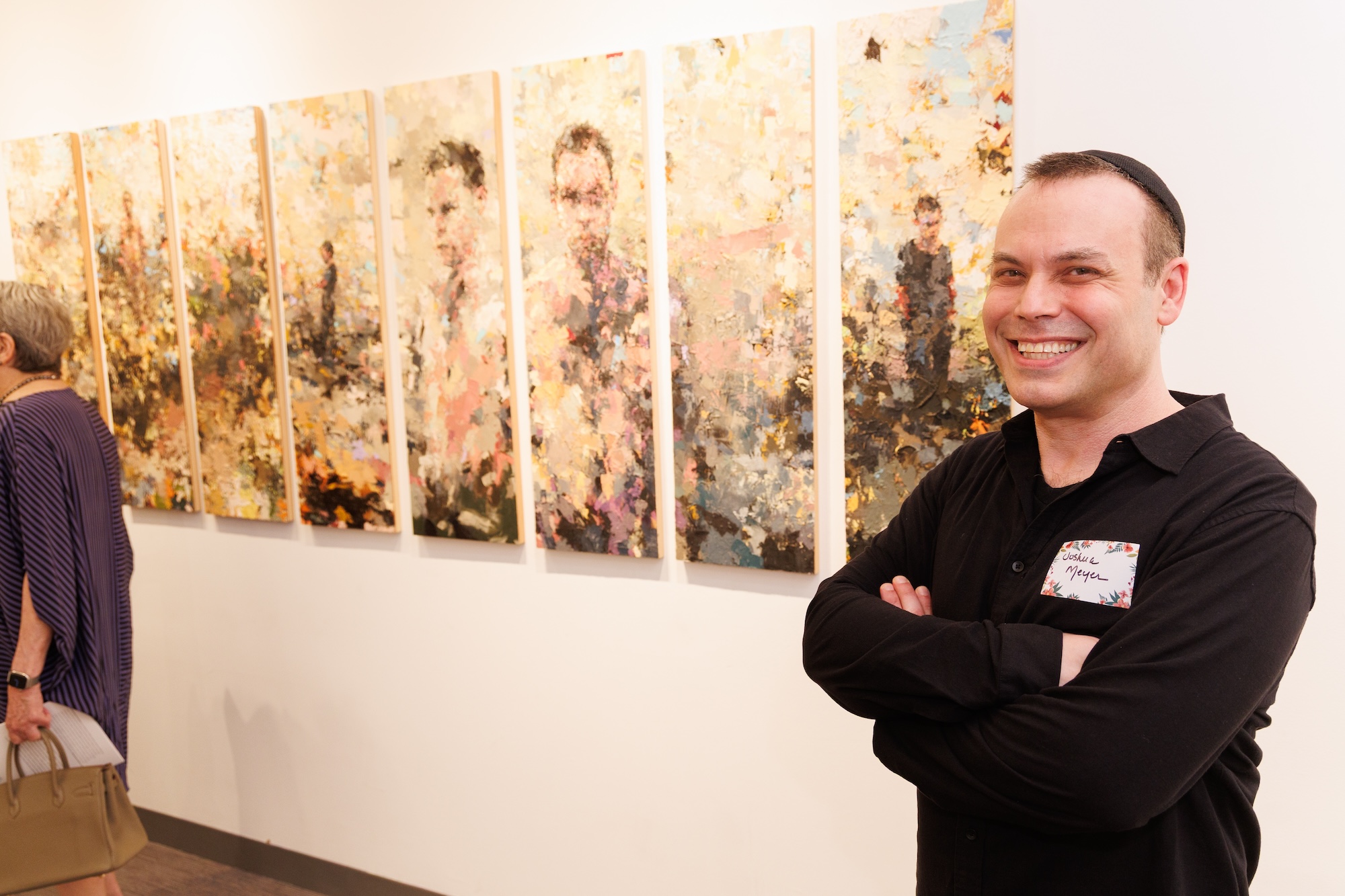
Honorable Mention: Joshua Meyer
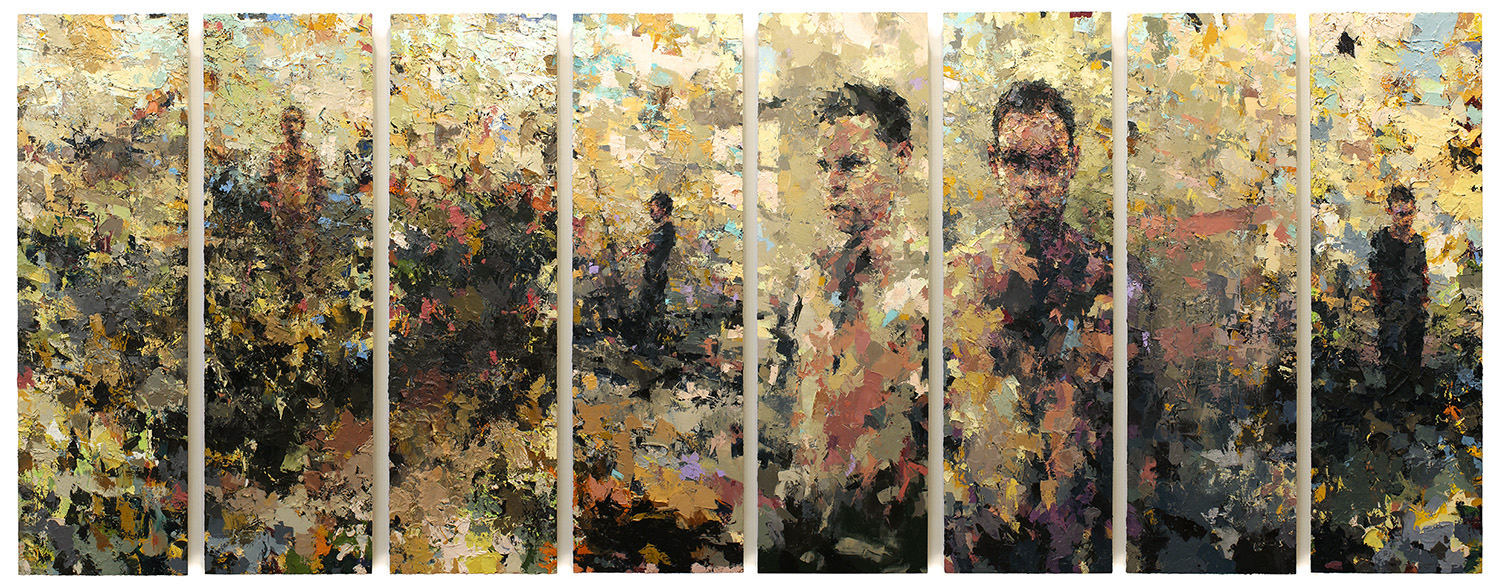
Eight Approaches, 2022, oil on board, 40" x 100"

Eight Approaches is a sequence of eight paintings, hung in a row, but it is really about the spaces in-between the paintings. Consequently, it is about the spaces in-between people and ideas. Taken together, the eight paintings nearly coalesce into a narrative, reminding us of side-by-side triptych paintings, comic-book panels or film stills, and of course the eight-armed hanukkiah.

Judaism loves complexity. We love to answer a question with a parable - from Hassidic Tales to Kafka and Midrash - so we can enter and engage. I hope viewers add their own stories, weaving, sorting and encountering a dialogue about the diversity and complexity of identity, community, and tradition.

My paintings have been grappling with two themes: light and time. Light is how we see and try to understand. Time is about how we change. Art allows us to hold multiple, competing truths. I paint people over long stretches of time by layering thick paint. Each daub holds a memory, and as they overlap, you can see time elapse. These two themes converge in Hanukkah, marking the passing of time with light. This giant, almost-but-not-quite hanukkiah begins by using the teachings, rituals, and traditions of the holiday as a lens to think about art and ourselves.